
Even though it has been only a bit more than a month since the beginning of this blog I am happy to note that there is already a tight group of people who have subscribed to my feed and continue to come back and read my posts on a regular basis.
I want to take this opportunity to do 2 things:
First and foremost I want to thank you all for the generous gift of your interest, your time and your moral support. I cherish those dearly and promise to do my best to provide you with more interesting, more relevant and better written singularity content during the new 2010.
In the end, without you — my readers, both the Singularity Weblog and the Singularity Symposium website will be not only pointless but will cease to exist.
It is your mouse clicks here that give me meaning and inspiration to keep searching for if I know one thing for sure it is that I don’t know…
Secondly, I want to highlight the top 5 most popular blog posts for 2009.
This list is based on visitors’ data as compiled by my Google Analytics account and is therefore entirely your list and not mine.
Your fellow traveler,
Socrates
Singularity Weblog Top 5 List
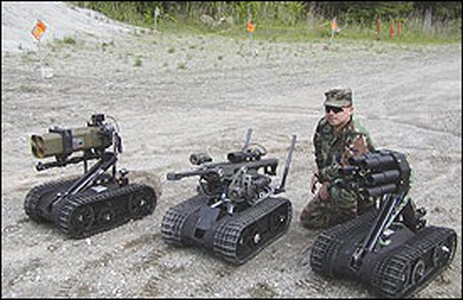
1. Dawn of the Kill-Bots: The Conflicts in Iraq and Afghanistan and the Arming of AI (part 1)
3. Mind Reading, Thought Control and Neuro Marketing: Is “the Lord of the World” still science fiction?
4. Do you want to live forever?
5. Dawn of the Kill-Bots: the Conflicts in Iraq and Afghanistan and the Arming of AI (part 3)

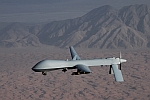 “A drone pilot’s nightmare came true when operators lost control of an armed MQ-9 Reaper flying a combat mission over Afghanistan on Sunday. That led a manned U.S. aircraft to shoot down the unresponsive drone before it flew beyond the edge of Afghanistan airspace.”


