Michael Shermer on Singularity 1 on 1: Be Skeptical! (Even of Skeptics)

by Socrates
Thumbnail image for Michael Shermer on Singularity 1 on 1: Be Skeptical! (Even of Skeptics)

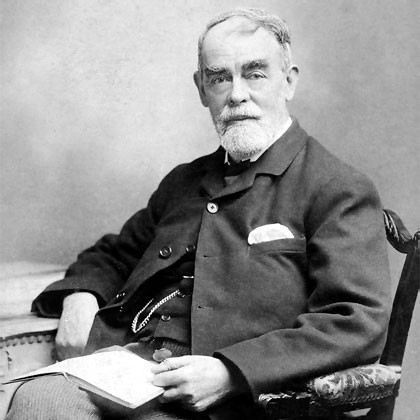
I couple of days ago I interviewed Michael Shermer for Singularity 1 on 1. I met Dr. Shermer at the recent Singularity Summit in New York where he was one of the most entertaining, engaging and optimistic speakers. Since he calls himself a skeptic and not a singularitarian, I thought he would bring not only balance to my singularity podcast but also a healthy doze of skepticism, and I was not disappointed. During our conversation we discuss a variety of topics such as: his education at a Christian college and original interest in religion and theology; his eventual transition to atheism, skepticism, science and the scientific method; SETI, the singularity and religion; scientific progress and the dots on the curve as precursors of big breakthroughs; life-extension, cloning and mind uploading; being a skeptic and an optimist at the same time; [...]

Read the full article →

Luke Muehlhauser on Singularity 1 on 1: Superhuman AI is Coming This Century

by Socrates
Thumbnail image for Luke Muehlhauser on Singularity 1 on 1: Superhuman AI is Coming This Century

Last week I interviewed Luke Muehlhauser for Singularity 1 on 1. Luke Muehlhauser is the Executive Director of the Singularity Institute, the author of many articles on AI safety and the cognitive science of rationality, and the host of the popular podcast “Conversations from the Pale Blue Dot.” His work is collected at lukeprog.com. I have to say that despite his young age and lack of a University Degree – a criticism which we discuss during our interview, Luke was one of the best and clearest spoken guests on my show and I really enjoyed talking to to him. During our 56 min-long conversation we discuss a large variety of topics such as: Luke’s Christian-Evangelico personal background as the first-born son of a pastor in northern Minnesota; his fascinating transition transition from religion and theology to atheism and science; his personal motivation and desire to [...]

Read the full article →

CNET’s Best of CES 2012 Show Awards

by Socrates
Thumbnail image for CNET’s Best of CES 2012 Show Awards

Many of you are following or even visiting the annual Consumer Electronics Show held each January in Las Vegas, Nevada. The CES show is considered to be the largest annual consumer electronics trade show in the world and for good or for bad it is likely that this may have been the very last one ever. At the end of the show CNET presents the best CES product awards. Here is the video of the 2012 awards ceremony for products in diverse categories such as: Car Tech; Cell Phones; Digital Cameras; Emerging Tech; Home Theatre and Audio; Laptop and PC’s; Software, Services and Apps; Networking and Storage; Tablets; Television; The People’s Choice and Best of Show.

Read the full article →

Head-Transplantation: A Short Documentary about Dr. R. J. White’s Controversial Experiments

by Socrates
Thumbnail image for Head-Transplantation: A Short Documentary about Dr. R. J. White’s Controversial Experiments

Dr. R. J. White: “I predict that what has always been the stuff of science fiction – the Frankenstein legend, in which an entire human being is constructed by sewing various body parts together, will become a clinical reality in the 21st century. Our modern day version of the tale will include the transplantation of a human brain. The brain cannot function properly without the plumbing of the body and the wiring of the head. So brain transplantation, at least initially, will require head transplantation or body transplantation, depending on your perspective.” This 15 min documentary chronicles the first monkey head-transplantation and a series of other similarly controversial experiments that were performed in Cleveland, Ohio during the 1960s and 70s by world-renowned neurosurgeon Dr. R. J. White. Dr. White narrates the chronicle of and the motivation behind his experiments in [...]

Read the full article →

Marcin Jakubowski on Open Source Ecology and Practical Post Scarcity

by Socrates
Thumbnail image for Marcin Jakubowski on Open Source Ecology and Practical Post Scarcity

We (still) live in a world of scarcity. Free entrepreneurship, free markets and the age-old principles of Economics are supposed to provide for the most efficient resource allocation and thereby defeat, or at least alleviate the problem. Yet, more than 2 centuries after Adam Smith and David Ricardo, this has not been accomplished. Consider a Big Idea: Reducing technology to the most simple yet sufficient modular lego-like people tech imaginable. A single DVD as the complete manual for your civilization-starter-kit. An open source DIY Global Village constructed with robust, sustainable, modular, highly efficient, low cost and self-made tools. Open Source Ecology refers to the integration of human and natural ecosystems along the lines of open-source principles such as open collaboration and sharing of information with the goal of creating real communities and achieving post scarcity. So, do you think that [...]

Read the full article →

Jose Cordeiro on Singularity 1 on 1: The Energularity is Near

by Socrates
Thumbnail image for Jose Cordeiro on Singularity 1 on 1: The Energularity is Near

This weekend I interviewed Jose Cordeiro for Singularity 1 on 1 and I have to admit that this was one of my favorite interviews so far with perhaps the strongest, most positive endings on the show. Jose is a published book author, energy expert, futurist, transhumanist and Singularity University faculty member. So, even if Venezuela’s terribly slow internet connection did not make for the best video recording, the interview is absolutely worth watching.  Furthermore, if you ever attend a public event or a lecture where you suddenly hear someone scream “Energyyyy!” on the top of their lungs – you will have no doubt that it can be no one else but our friend Cordeiro. During our 48 min conversation we discuss a large variety of topics such as: Jose’s personal background and his failed attempt to become Venezuela’s energy minister; the staggering murder rates in [...]

Read the full article →

Copyright Was Just The Beginning: Cory Doctorow on the Coming War on General Computation

by Socrates
Thumbnail image for Copyright Was Just The Beginning: Cory Doctorow on the Coming War on General Computation

I have always been a huge fan of Cory Doctorow’s – I read his books, I listen to his podcast, I watch his numerous and always ground-breaking keynote speeches and I value his insights and expert opinion. This time, however, Cory outdid even himself. Below you can watch Doctorow’s seminal keynote speech given at the 28th Chaos Communication Congress in Germany. In addition, since the original video recording was released under a creative commons licence and given the immense importance of the topic, I decided to post the audio via my Singularity 1 on 1 podcast. So, you can listen to or download the audio file above or scroll down and watch the full video recording below. I hope you find it as inspiring, as enraging and as profound as I did. Enjoy!   Abstract: “The last 20 years of Internet policy have [...]

Read the full article →

Our Grey Goo Future: Possibility and Probability

by CMStewart
Thumbnail image for Our Grey Goo Future: Possibility and Probability

What is Grey Goo? Not necessarily grey, and not necessarily gooey, “grey goo” is both a nanotechnological substance which increases exponentially without practical limit, and a hypothetical scenario in which the mass of planet Earth – or the universe – is ecotophaged into self-replicating nanobots. Mathematician John von Neumann originally described macroscopic self-replicating robots. These replicators are sometimes called “von Neumann machines.” In turn, nanotechnology pioneer Eric Drexler coined the term “grey goo” in his book Engines of Creation. Drexler described the exponential growth and inherent limits of such highly specialized nanomachines: “…the first replicator assembles a copy in one thousand seconds, the two replicators then build two more in the next thousand seconds, the four build another four . . in less than two days, they would outweigh the Earth; in another four hours, they would exceed the mass [...]

Read the full article →