An Atheist Who Wears a Cross and a Verb! What About You?!
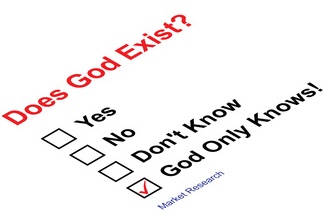 The issue of religion is one of the more common questions that I ask most of my guests on Singularity 1 on 1. But this is hardly the most important thing during any conversation. Still, if we are talking about the future of humanity, it may be relevant to know a little more about the person’s past and present religiosity. In this way when we move on to topics such as cosmology, metaphysics, ethics or epistemology, we are more mindful of our own implicit presumptions.
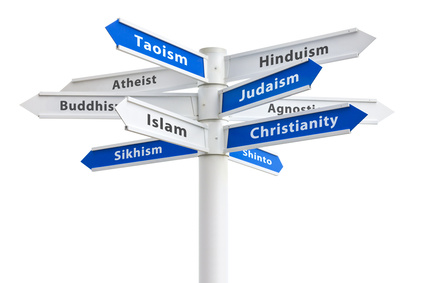
The danger in the above approach is that one might embrace the label a bit too tightly and thereby ruin the potential for a genuine conversation and exchange of ideas. Thus we must also be aware of all the religious, intellectual, political or other such shortcuts we are using. While they can be useful in the short term, in the longer term they omit so much that they become rapidly useless.
In addition, the vast majority of us are simply full of contradictions. Thus the more you get to know a person the harder it is to slot her into a rigid label or category.
Take me for example – I consider myself to be an unapologetic atheist. Yet, one of the contradictory personal facts about this statement is that much of the time I wear a golden cross around my neck.
So how can that be?
Let me give you the top three reasons:
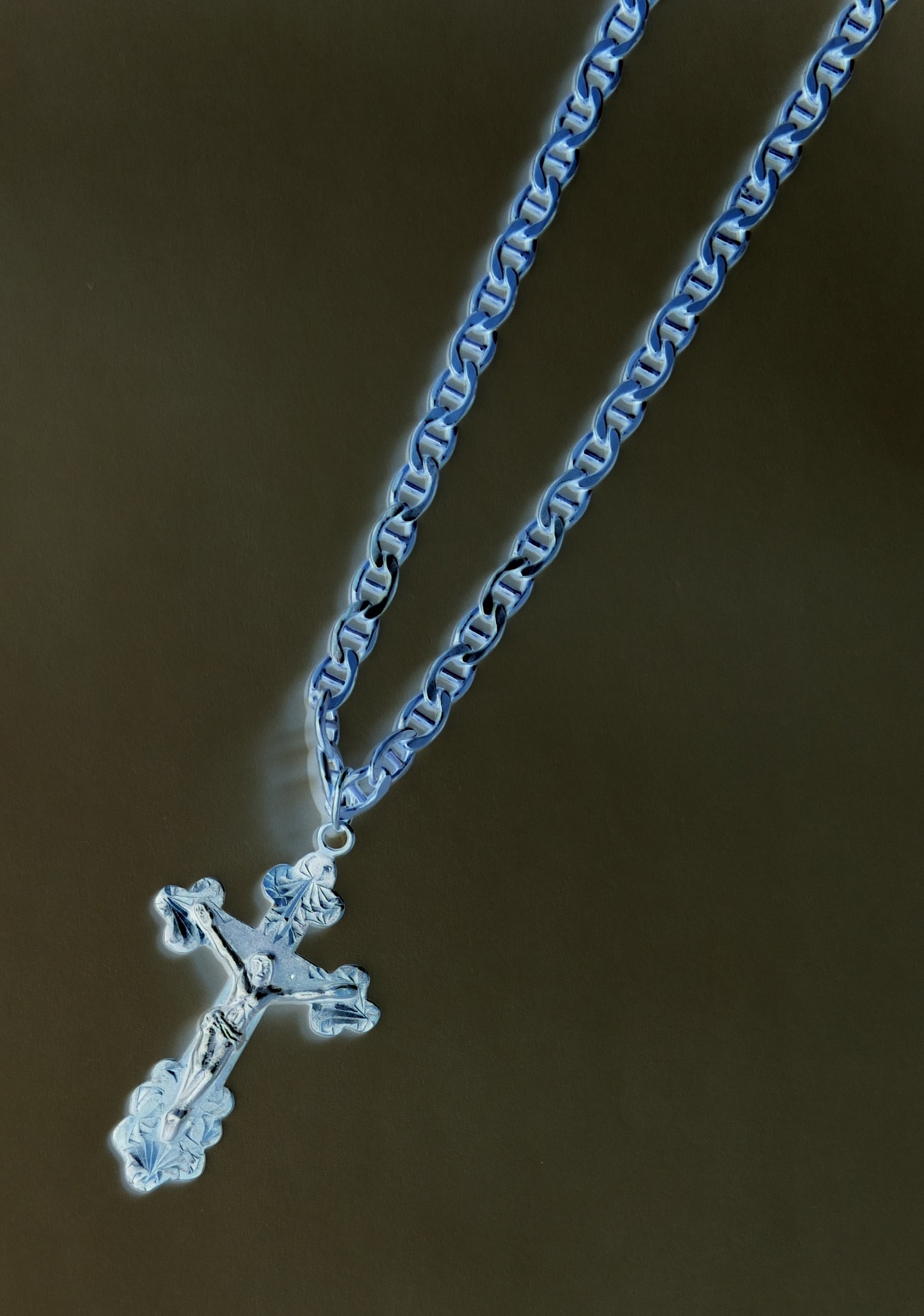 Firstly, there is a very personal story behind this particular cross because it was made of my parents’ wedding rings after my mother passed away. So for me it has a very different emotional meaning rather than the usual Christian one.
Secondly, while I am an atheist who was born and lived in a communist country, even there I was unable to escape the deeply embedded Judeo-Christian culture permeating Western Civilization. Consequently, being an atheist hasn’t prevented me from occasionally falling a victim to the same implicit presumptions that are characteristic of Christianity or even Judaism. Thus wearing a cross reminds me that I am still a child of the temporal, political, cultural and georgraphic context I was born in.
Finally, the cross reminds me that the body of my knowledge is always going to be dwarfed by the body of my ignorance. So to me it represents the X factor – something that I don’t know I don’t know – the unkown unknown.
Thus, despite the cross and what it might signify to you, I am not a Christian. In fact, since I am pretty certain there is no such divinity as professed by any of the major religions – I am very much an atheist. However, in a larger sense I am an agnostic: I realize that I don’t know everything and am willing to follow the evidence no matter where it takes me.
If and when I find that I’m wrong I change my mind.
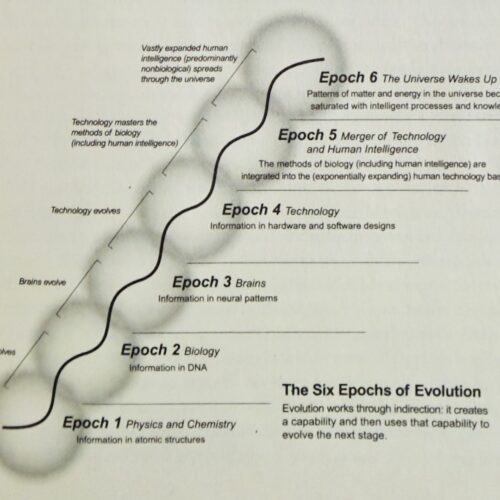
This, I believe, is the essense of the Socratic method – to ask questions, make mistakes, learn and evolve. That is why I believe human is a step in evolution, not the culmination. We are each a process, not an entity. As Buckminster Fuller put it once:
“I live on Earth at present, and I don’t know what I am. I know that I am not a category. I am not a thing — a noun. I seem to be a verb, an evolutionary process — an integral function of the universe.” (I Seem To Be A Verb 1970)
***
Astrophysicist Neil deGrasse Tyson claims the title “scientist” above all other “ists.” And yet, he says he is “constantly claimed by atheists.” So where does he stand?
In his own words: “Neil deGrasse, widely claimed by atheists, is actually an agnostic.”
Neil is clearly a verb. But what about you?!
Are you an -ist or an -ism? A verb or a noun?
Related articles