Dune Is Not What You Think: The Warning Frank Herbert Meant Us to Hear
Socrates / Op Ed
Posted on: March 20, 2026 / Last Modified: March 20, 2026
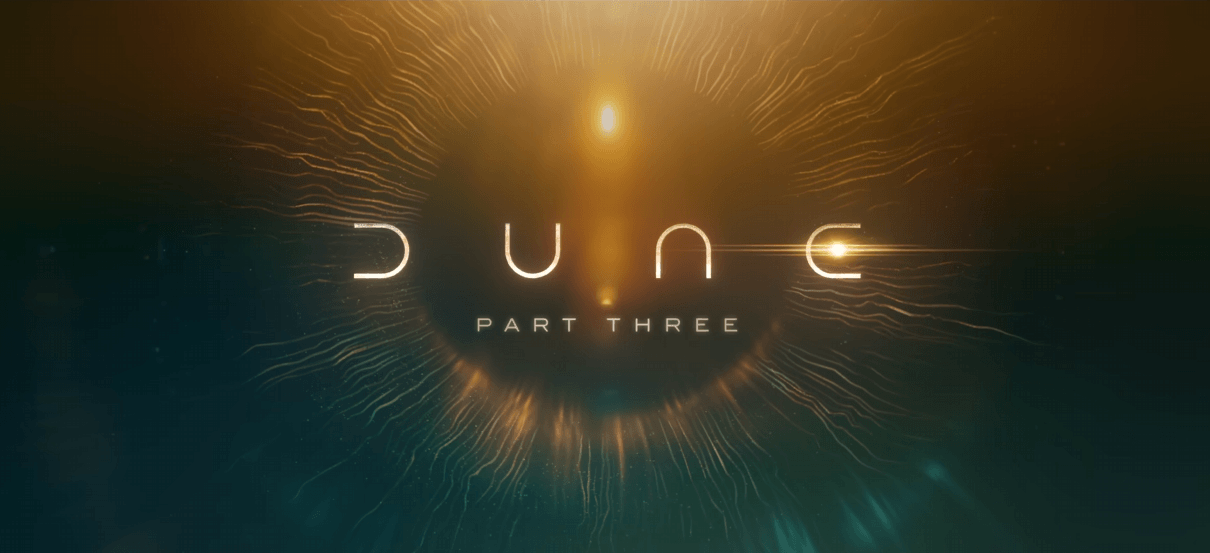 With Dune: Part One and Dune: Part Two now behind us, the internet is full of takes about resilience, resistance, and righteous underdogs. Most of them miss the point entirely. Dune 3 — Dune Messiah — may finally set the record straight. If people are willing to listen.
The Most Misread Science Fiction Epic of All Time
Too many people misunderstand what Dune is about. That was true before Denis Villeneuve’s films, and it became even more true after them. Audiences walked out of Dune: Part One and Dune: Part Two, inspired and moved, ready to root for Paul Atreides and the Fremen against the empire. They saw oppression and resistance. They saw a hero.
They saw exactly what Frank Herbert was afraid they would see.
Beware the shallow clichés when reading this book — or watching these films. Herbert was a master of multi-layered meaning. Story within a story. Meaning within a meaning. Plot within a plot. Warning within a warning. And the warning he spent six novels delivering is one we keep refusing to receive.
Dune is not about resilience. It is not a hero’s journey. It is not an invitation to find your inner messiah.
According to Herbert himself, Dune is a warning against charismatic leadership — not an example of it.
The Trap Herbert Set, and We Keep Falling Into
Herbert was explicit about his intentions. He wanted to demonstrate, as vividly as possible, how dangerous it is to hand your thinking, your cause, and your future to a charismatic leader. The Fremen don’t save themselves through Paul Atreides. They are ultimately consumed by him.
This is precisely what Chani understands — and what the films, to their credit, show clearly in Dune: Part Two:
This is how they enslave us!
The conditioning, the prophecy, the manufactured messiah myth planted generations before Paul’s arrival: all of it is a mechanism of control, not liberation.
Paul doesn’t break the system. He becomes the system. Worse, he becomes something the system could never have engineered on its own: a god.
And gods, Herbert understood, are the most dangerous things human beings create.
What the Sequels Actually Say
The audiences who left theaters electrified by Paul’s rise will encounter something uncomfortable in Dune 3. Dune Messiah, the novel on which it will be based, is where Herbert makes his warning impossible to ignore.
We see a historian, Bronso of Ix, persecuted and executed by Paul’s religious apparatus for blasphemy against the prophet. This is where the liberation movement ends up. This is what the jihad becomes: a religious bureaucracy that kills scholars for “asking the wrong questions.”
And Paul’s jihad has a body count. More than 60 billion people die in his name across the known universe. At one point in Dune Messiah, Paul compares himself to history’s greatest mass killers — and laughs. Not because he is evil in the cartoon sense, but because he has seen far enough into the future to understand the full weight of what he has set in motion, and also far enough to know he cannot stop it.
This is the man audiences are cheering.
Herbert draws another line in Dune that most people overlook: Paul Atreides carries Harkonnen blood. He is directly descended from the House he is fighting against. The boundary between oppressor and liberator is not a wall. It is a mirror.
The God Emperor and the Price of Order
Paul’s story doesn’t end with his victory over the emperor. It ends in Dune Messiah with him walking into the desert — a symbolic suicide. He abandons his throne, his children, and his empire. He is not triumphant. He is broken by what he has become. In Children of Dune, he returns as the blind preacher and ultimately allows himself to be cut down in a public attack, completing his self‑negation. A fitting end for someone created by the mob and eventually destroyed by it.
His son Leto II takes things further still. The God Emperor reigns for approximately 3,500 years, imposing a peace so total and so violent that it makes Paul’s jihad look like a prelude. The direct and indirect death toll from his enforced peace, the Famine Times, and the Scattering he set in motion, clearly dwarfs Paul’s jihad and plausibly reaches into the hundreds of billions.
Leto II loved Duncan Idaho so much that he had him cloned across thousands of years. Whenever a Duncan ghola rebelled and tried to kill him, Leto killed him first and made another. Until the last one. In God Emperor of Dune, Leto finally allows the final Duncan, alongside Siona, to succeed. He chooses his own death. The managed loop doesn’t break; it completes. Order so total that it encompasses its own termination.
Herbert’s point is not subtle. Order is always temporary. It is always imposed by tremendous violence. And it always comes at a tremendous price.
Herbert Was Writing About Us
The parallels to real-world history are real, and Herbert put them there deliberately. He was inspired in part by T.E. Lawrence and the Arab Revolt of 1916 against the Ottoman Empire. The spice is oil. The Fremen are the people of the Middle East. The empire extracting the resource while propping up local power structures is the West. All of that is in the text.
But here is what the “we are the empire” reading misses: Herbert wasn’t just indicting the empire. He was indicting the solution.
The deeper warning isn’t: Don’t be the empire!
It’s: Don’t create the messiah you hope will save you from the empire!
Because the messiah’s jihad kills more people than the empire ever did. Because the liberation movement becomes the next oppressor. Because just causes, when they fuse with charismatic leaders and prophetic mythology, stop being just.
Herbert was prescient, not because history repeats itself. He was prescient because human nature repeats itself. We love the savior story. We want the underdog narrative. We are desperate for the chosen one who will ride in and make our suffering mean something.
And that desperation is the vulnerability Herbert was mapping.
Machines, Prophets, Masters
Herbert had a formulation that applies as much to our age of algorithms and AI as to any desert messiah:
Those who outsource their thinking, whether to machines or to prophets, end up enslaved. Just to different masters.
The Butlerian Jihad, the prehistoric event that banned thinking machines in the Dune Universe, was not simply a war against computers. It was a war against the abdication of human judgment. And yet, across six books, Herbert shows us a humanity that keeps abdicating — to spice, to religion, to charismatic leaders, to the comfort of certainty in an uncertain universe.
We banned the machines. We built gods instead. Herbert’s question is whether there is any meaningful difference.
What Dune 3 Might Finally Teach Us
The arrival of Dune: Part Three — adapting Dune Messiah — is an opportunity. It is the moment when the story stops letting us feel good about Paul Atreides. It is the moment the trap closes, and we see what we have been cheering for.
Whether audiences will accept that invitation is another question. Human nature, as Herbert knew, is stubborn. We want the hero. We want the victory. We want the messiah to be real, righteous, and worth following.
Herbert spent his career telling us that is exactly the wrong thing to want.
Dune is, ultimately, a dire warning. Not a role model. Not a resistance manual. Not an inspiration poster.
It is a mirror. And the empire it is really describing — the one doing the most damage across all six books — is not the Padishah Emperor, or the Harkonnens, or even Paul’s jihad.
It is us. Our hunger for leaders who will think for us. Our willingness to follow. Our refusal to see.
Herbert wrote the warning. He embedded it in every layer of the story. He had Chani say it out loud in the film.
The only question is whether we are finally ready to hear it.