Ignorance Is the Greatest Evil: Why Certainty Does More Harm Than Malice
Socrates / Op Ed
Posted on: December 16, 2025 / Last Modified: December 17, 2025
 More harm has been done to our world not by overtly malevolent people, but by ignorant ones, especially those ignorant of their own ignorance.
They believe they are doing good. They are convinced they are right. And precisely because they don’t know that they don’t know, they act with a fatal certainty that turns good intentions into real damage. This kind of certainty can be both homicidal and suicidal. There is no upper limit to its destructiveness.
That is why Socrates believed that ignorance is the greatest evil.
Not ignorance in the shallow sense of lacking information, but a more profound and far more dangerous kind: ignorance fused with certainty. When people are unaware of the limits of their own knowledge, they stop listening, stop questioning, and stop learning. Add pride and a lack of humility, and ignorance hardens into something far worse: certainty weaponized. Those who believe they know what is right are often not merely mistaken; they are dangerous.
None of us is exempt. Every one of us has fallen into this trap at some point. I certainly have. But the danger scales with power. Those who hold political, economic, cultural, or technological power are the most dangerous precisely because their ignorance, when combined with certainty, has the greatest reach.
That is why power must come with responsibility. And why certainty, pride, and the absence of humility are not just personal flaws but systemic risks.
This is not to deny the existence of genuinely malicious people. They exist. But even here, the pattern holds. Rarely do such people see themselves as evil. On the contrary, they and their supporters tend to believe they alone understand what is right, what is wrong, and how the world must be fixed. Evil almost never announces itself as evil. It arrives convinced of its own righteousness.
If ignorance is the greatest evil, then the first step away from it is both simple and brutally difficult:
I don’t know.
We can only begin to learn once we recognize our ignorance. Only then can curiosity replace certainty. Only then can we approach the world with something like a child’s openness rather than an ideologue’s rigidity. This is not weakness. It is the beginning of wisdom.
John Keats called this capacity Negative Capability: the ability to hold two contradictory ideas simultaneously without rushing to resolve the tension. To accept that people contain both good and evil, knowledge and ignorance, love and hate. This is not moral confusion. It is an honest engagement with reality.
It is also deeply aligned with the Dao of our world: everything good contains something bad, and everything bad contains something good. Attempts to purify reality and divide the world neatly into heroes and villains inevitably end in distortion, violence, or both. Certainty demands simplification. Humility allows complexity.
If ignorance is the disease, then humility is its only reliable antidote. Not performative humility. Not false modesty. But the lived recognition that reality is more complex than our beliefs about it, and that other people are not obstacles to be overcome but participants in a shared moral world.
Leo Tolstoy understood this danger intuitively. In A Calendar of Wisdom, he offers no ideology, no doctrine, no final answers — only a test:
If an action increases the amount of love in the world, it is good. If it separates people and creates animosity among them, it is bad.
This is not a formula that eliminates uncertainty. It is a compass that forces us to live with it. And that is precisely the point. Moral certainty closes the mind. Moral responsibility keeps it open.
None of this means that we must suspend judgment indefinitely or refuse to act. Action is unavoidable. Decisions must be made. Lines must sometimes be drawn. But there is a difference between acting responsibly under uncertainty and acting as if uncertainty does not exist. Humility does not paralyze action; it disciplines it. It keeps our commitments provisional, our judgments revisable, and our power accountable.
When systems are designed to act without revisability or accountability, what was once a personal failing becomes a structural one.
This path is neither comfortable nor straightforward. It offers no certainty, no final answers, and no ideological shelter. And that is precisely why it is so threatening to modern systems of power.
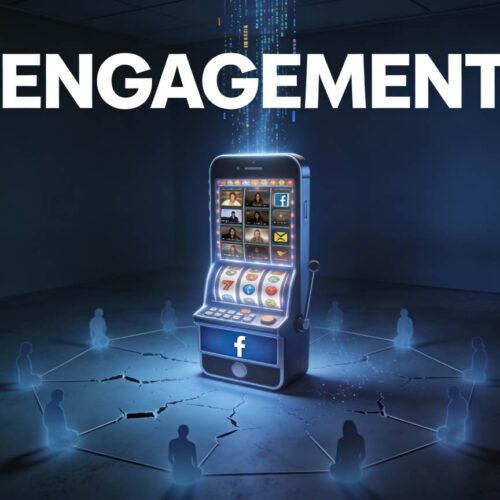
Our political institutions, technological platforms, and economic structures are increasingly built on the opposite assumption: that complexity can be reduced, that uncertainty can be eliminated, and that sufficient data, computation, or authority can replace humility. The promise is always the same:
Trust the system. Trust the model. Trust the experts. Trust the algorithm.
We are told that the messiness of human judgment can finally be engineered away.
But ignorance does not disappear when it is automated.
It scales.
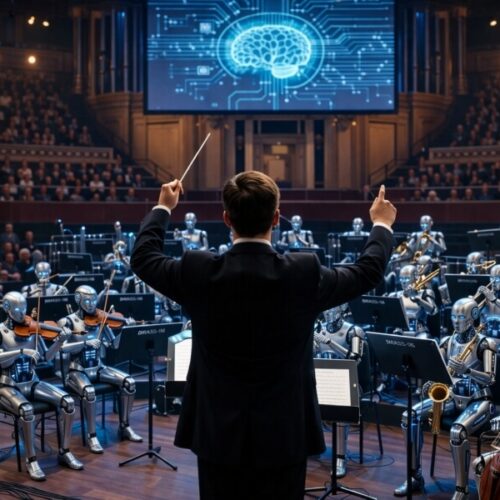
When certainty is embedded in systems of code, policy, incentives, or ideology, it becomes harder to question and nearly impossible to resist. Errors stop being local. They become systemic. And because these systems do not remove human judgment but conceal it behind dashboards, metrics, and claims of objectivity, they often lack the very mechanisms required to recognize when they are wrong.
This is how ignorance becomes institutionalized.
Dostoevsky saw this long before the advent of machine intelligence or modern bureaucracy. For him, pride — the refusal to acknowledge one’s limits — was the gateway to all other lies. Pride begins with certainty. And certainty, once fused with power, severs responsibility from consequence.
Today, we outsource responsibility upward and outward — to markets, governments, and technologies, including AI. But ignorance does not dissolve when responsibility is diffused. It becomes invisible. And invisible ignorance is the most dangerous kind.
True strength, personal or civilizational, does not come from asserting control, dominance, or moral superiority. It comes from remaining accountable in a world we do not fully understand. From resisting the temptation to collapse complexity into slogans, models, or enemies.
When Father Zosima says in The Brothers Karamazov,
Everyone is responsible to all men for all men and for everything
he is not making a mystical claim. He is issuing a moral warning. The moment we believe responsibility belongs elsewhere — to the system, the ideology, or the algorithm, we have already surrendered our humanity.
Ignorance is the greatest evil not because we lack knowledge, but because we refuse to recognize our limits — especially when we are powerful. And in an age of unprecedented technological and political power, that refusal is no longer a private failing. It is an existential risk.
Humility offers no guarantees.
Certainty does — and the guarantee is catastrophe.