Vivek Wadhwa: Take What You Know and Do Good
Nikola Danaylov / Podcasts
Posted on: March 13, 2012 / Last Modified: November 13, 2021
Podcast: Play in new window | Download | Embed
Subscribe: RSS
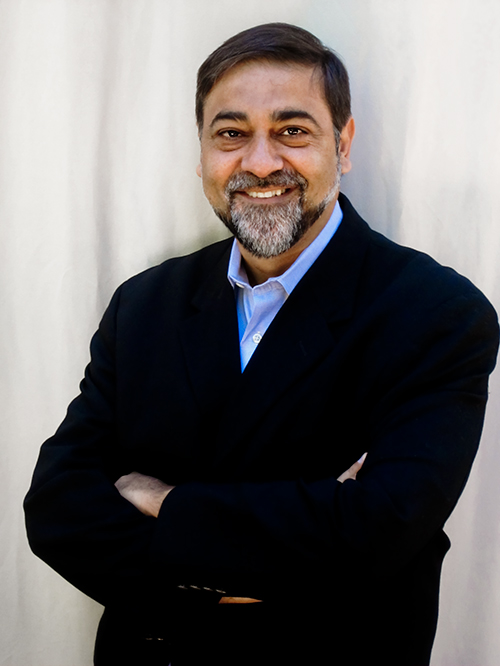 Last week I interviewed Vivek Wadhwa on Singularity 1 on 1.
I met Vivek last summer at Singularity University where he is the VP of academics and innovation. Vivek is one of those multi-talented and very outspoken people who are never afraid to take the risk and say what they think. He is also a successful entrepreneur and, as a contrarian in the true Socratic fashion, is someone motivated by impact, not profit.
During our conversation with Vivek we discuss issues such as the stories behind his becoming (accidental) entrepreneur and an (accidental) SU linchpin; his current position at Singularity University, its structure and the amazing group of people gravitating around it; the convergence of exponential technology and Vivek’s motivation to do good; the pro’s and con’s of being an outspoken contrarian; the bubble in some tech stocks such as Groupon; his love of science fiction and the fact that technology has already delivered more than he expected; the rapture of the nerds criticism; the up and coming technologies that will change the world as well as the risks and benefits thereof.
As always you can listen to or download the audio file above or scroll down and watch the video interview in full. To show your support you can write a review on iTunes, make a direct donation, or become a patron on Patreon.
Who is Vivek Wadhwa?
Vivek Wadhwa is Vice President of Academics and Innovation at Singularity University; Fellow, Arthur & Toni Rembe Rock Center for Corporate Governance, Stanford University; Director of Research at the Center for Entrepreneurship and Research Commercialization at the Pratt School of Engineering, Duke University; and distinguished visiting scholar, Halle Institute of Global Learning, Emory University.
Wadhwa oversees the academic programs at Singularity University, which educates a select group of leaders about the exponentially growing technologies that are soon going to change our world. These advances—in fields such as robotics, A.I., computing, synthetic biology, 3D printing, medicine, and nanomaterials—are making it possible for small teams to do what was once possible only for governments and large corporations: solve the grand challenges in education, water, food, shelter, health, and security.
In his roles at Stanford, Duke, and Emory universities, Wadhwa lectures in class on subjects such as entrepreneurship and public policy, helps prepare students for the real world, and leads groundbreaking research projects. He is an advisor to several governments; mentors entrepreneurs; and is a regular columnist for The Washington Post, Bloomberg BusinessWeek, and the American Society of Engineering Education’s Prism magazine. Prior to joining academia in 2005, Wadhwa founded two software companies.