Ada Palmer on Inventing the Renaissance: How Golden and Dark Ages Are Constructed and Why They Matter
Socrates / Podcasts
Posted on: February 15, 2026 / Last Modified: February 15, 2026
Podcast: Play in new window | Download | Embed
Subscribe: RSS
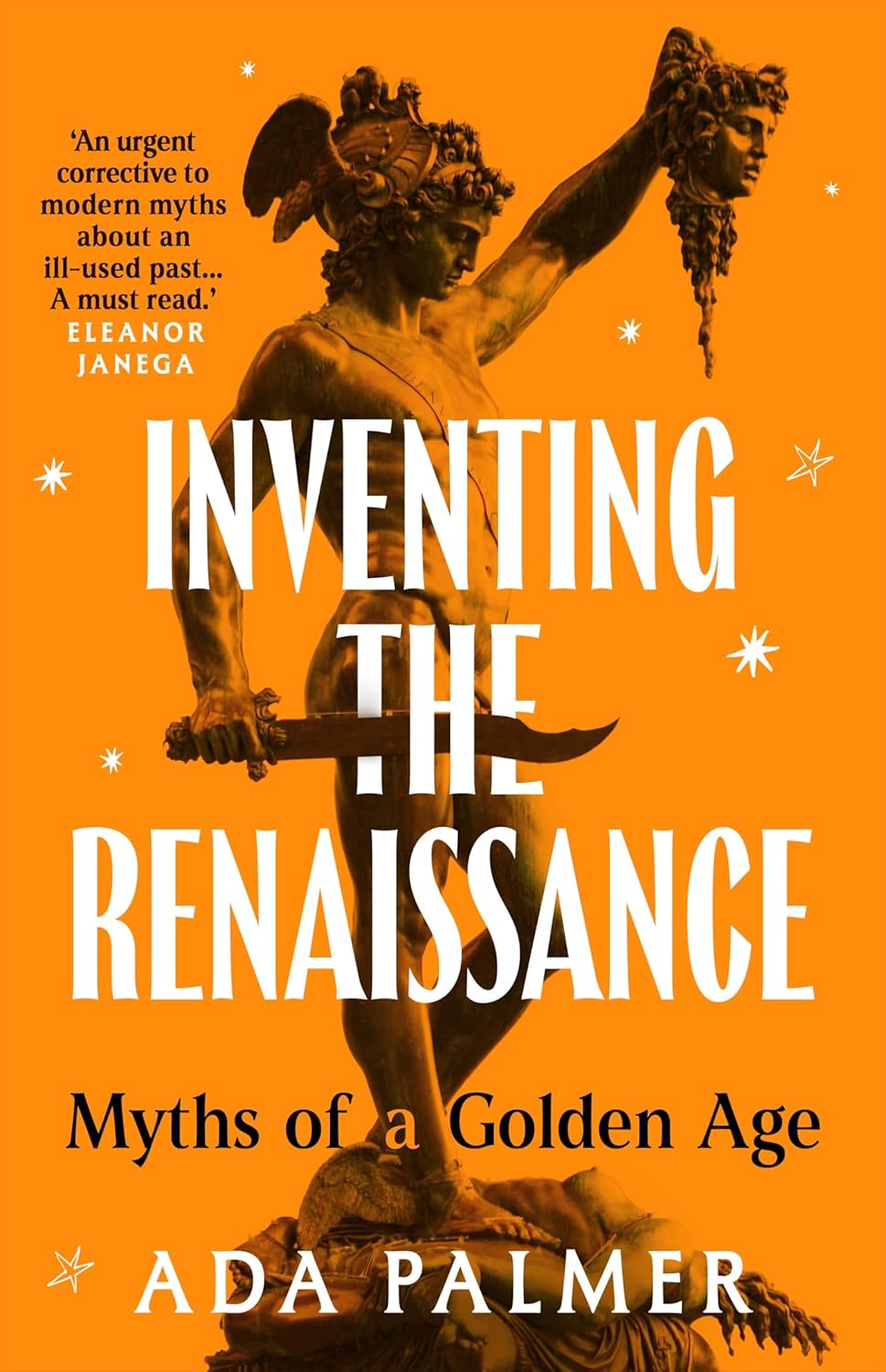 Was the Renaissance truly a Golden Age?
Or was it something far more powerful — and far more revealing?
In my third conversation with Ada Palmer, we dive into her new book, Inventing the Renaissance: Myths of a Golden Age, and dismantle one of the most enduring myths in Western history: that civilization moves cleanly from darkness to light.
This is our third long-form discussion. If you’re new to our conversations, I highly recommend revisiting our earlier interviews here and here, which lay the groundwork for this one.
But this episode isn’t really about the Renaissance.
It’s about how societies construct Golden Ages and Dark Ages — and how those narratives shape power, legitimacy, and the future.
The Renaissance Was Framed, Not Found
“Renaissance” means rebirth. But rebirth implies death. To celebrate a Golden Age, you must first invent a Dark Age.
As Ada explains, these labels were not objective descriptions. They were rhetorical tools — created by Petrarch, humanists, political actors, and later historians to legitimize their present by reshaping the past.
Golden Ages are not natural phenomena.
They are narratives.
And narratives confer power.
Why This Still Matters
We do this today.
We speak of:
The Age of AI
The End of Democracy
Civilizational Collapse
The Fourth Industrial Revolution
Utopia and dystopia are modern versions of Golden and Dark Ages.
In my essay Ignorance Is the Greatest Evil, I argue that certainty fused with power is more dangerous than malice. Golden Age narratives often operate with precisely that certainty — simplifying complexity into moral clarity.
But history is rarely simple.
The Renaissance itself was violent, unstable, and deeply unequal — even as it produced extraordinary art and ideas. It was neither purely Golden nor purely Dark.
It was human.
Manifestos, Dilemmas, and the Future
Years ago, I wrote a transhumanist manifesto. It was confident, clear, and certain.
Later, I returned to doubt.
In Transhumanist Manifestos and Dilemmas, I reflected on how manifestos mobilize action but often erase complexity. Golden Age narratives function the same way: they inspire and legitimize — but they also oversimplify.
Ada’s work does not replace one myth with another.
It teaches us to question every myth — including the one we may believe we are living in now.
The Real Question
Are we progressing?
Or are we narrating progress?
Is AI our Renaissance — or will future historians label this era differently?
Golden and Dark Ages are not objective states of civilization.
They are constructed lenses.
And once those lenses become embedded in institutions, technologies, and political movements, they stop being stories and start shaping reality.
That is why they matter.
Watch our full 3-hour conversation. Then ask yourself:
Who is framing our present as a Golden Age — or a Dark Age — and to what end?
As always, you can listen to or download the audio file above or scroll down and watch the video interview in full. To show your support, you can write a review on iTunes, make a direct donation, or become a patron on Patreon.
Who is Ada Palmer?
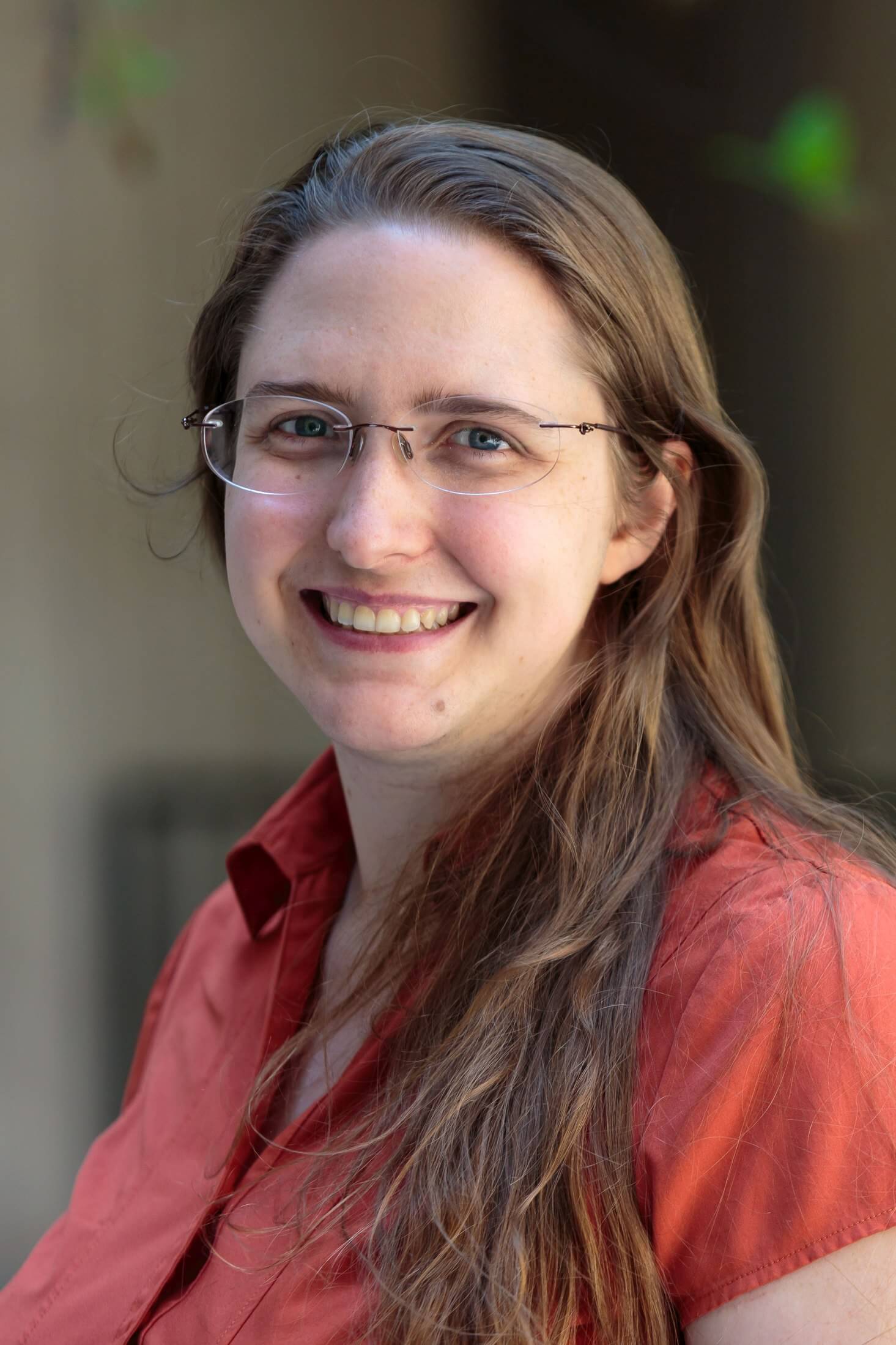 Ada Palmer is a cultural and intellectual historian of early modern Europe and an Associate Professor in the History Department at the University of Chicago. Her research explores censorship, radical heterodoxy, and how revolutions in information technology — from the print revolution to the digital age — reshape knowledge, power, and belief. She is the author of Reading Lucretius in the Renaissance and the widely discussed Inventing the Renaissance, which reexamines how the ideas of a “Dark” Middle Ages and a “Golden” Renaissance were constructed and later institutionalized.
Palmer is also an internationally award-winning science fiction and fantasy novelist, best known for the Hugo-nominated Terra Ignota series, beginning with Too Like the Lightning. Her work bridges rigorous historical scholarship and speculative imagination, exploring politics, philosophy, and the future of civilization.
Beyond academia and fiction, she is a disability activist, composer of polyphonic a cappella music, scholar of anime and manga, consultant for comics publishers, blogger at ExUrbe.com, and host of the podcast Ex Urbe, Ad Astra.