There Is No Formula: Why AI Cannot Solve What Matters Most
Nikola Danaylov / Op Ed
Posted on: May 6, 2026 / Last Modified: July 21, 2026
 There is no formula for predicting the future. No formula for dealing with change. No formula for living a good life, for success, for great art, for writing a great book, or for producing a great film. Every time we reach one of those, even when following a formula, we have to break the pattern in some subtle or not-so-subtle way. And the way we successfully break it is almost always a surprise.
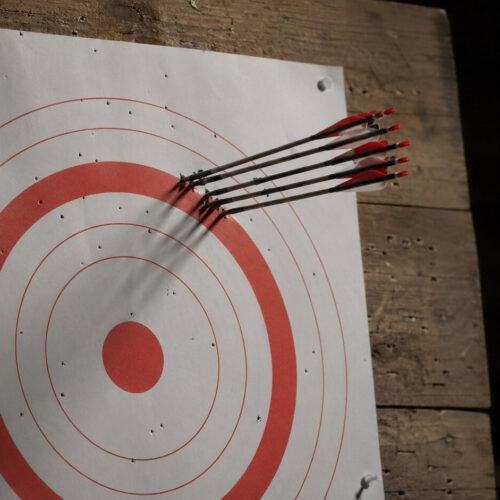
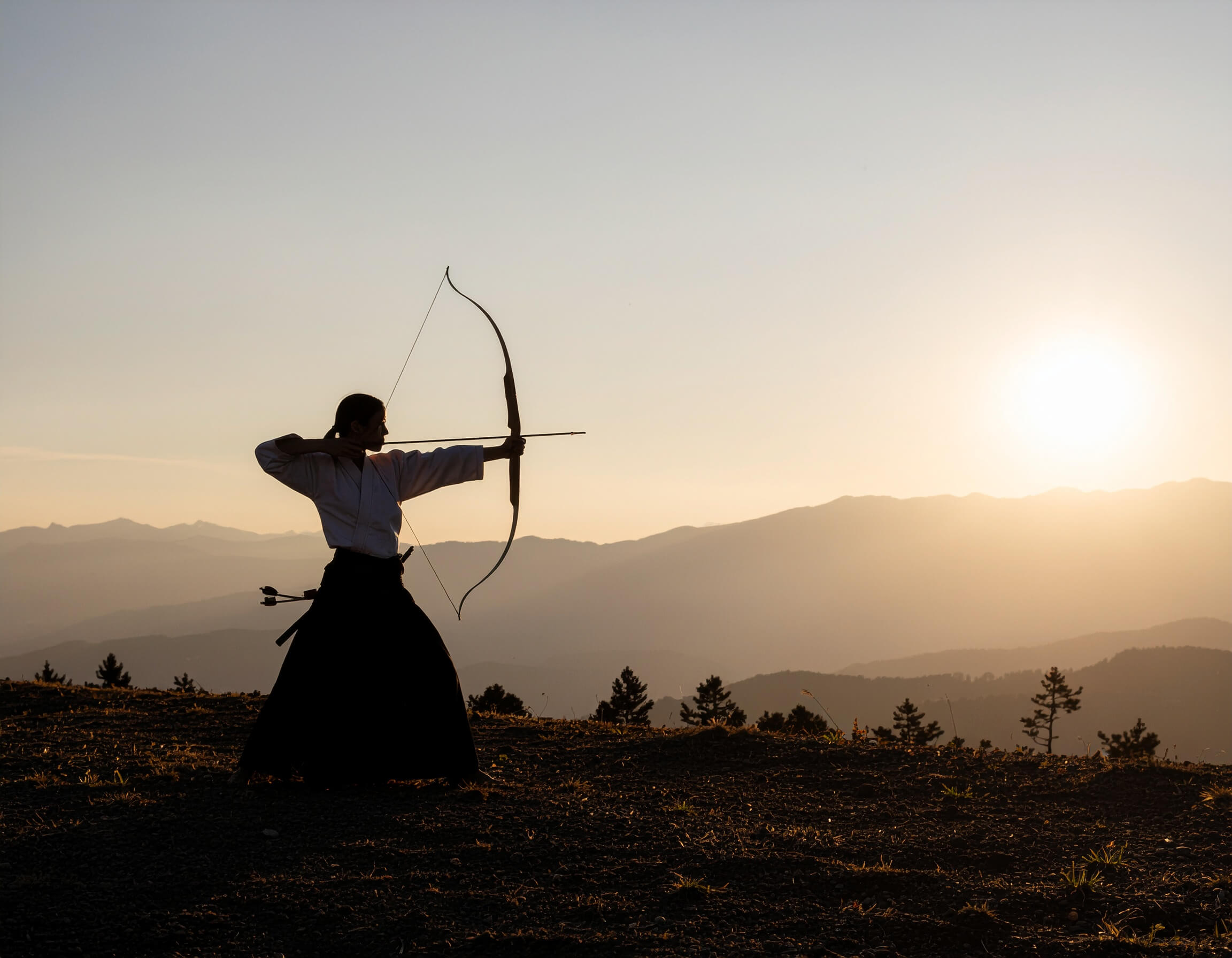
As Japanese Kyudo masters teach their students, the release of the arrow must surprise the archer, like a raindrop falling from a leaf.
Sometimes shortcuts take twice as long. Or get us lost.
Complicated vs. Complex: Computable vs. Livable
Complicated problems are, in the end, computable. Fusion. Protein folding. Orbital mechanics. Route optimization. The human genome. They are formidable, sometimes brutally so, but with enough compute, enough data, and enough patience, they bend.
Complex problems do not bend. They cannot be solved at all. They can only be lived. Being in love. Living a life of meaning. Making great art. Dealing with uncertainty, change, and death.
Physicists already have a name for what happens when complexity creeps in. Add a third gravitational mass to a two-body system, and the math stops yielding clean answers. It is called the three-body problem. Now scale that up to any actual human situation, with its social, emotional, psychological, financial, biological, moral, and spiritual variables. A handful of those will bend to a model. The rest never will.
And this is the error we keep repeating. We mistake the complex for the merely complicated. We bring formulas to questions that ask for wisdom, presence, and judgment. Then we are surprised when the Hammer of AI keeps breaking the very thing we were trying to mend.
Two Kinds of Hope: Amdir and Estel
If formulas cannot reach the complex, we need a different orientation. Not calculation, but hope. And not just any hope.
Tolkien gave us two distinct Elvish words for “hope.” The first is Amdir, meaning “looking up”: an expectation of good that, though uncertain, has some foundation in what is known. The second is Estel, often translated as “trust.” Estel is unfounded hope, unreasonable hope, hope beyond hope. It rests not on the known, but on something deeper, what Finrod calls “our nature and first being.”
Vaclav Havel was pointing at the same thing when he wrote: “Hope is not the conviction that something will turn out well, but the certainty that something makes sense, regardless of how things turn out.”
That, to me, is Estel.
Estel is the hope that approaches the impossible as merely the not-yet-possible. As an old Indian proverb has it, “What is hard takes time, what is impossible simply takes a little longer.” That is why fairy tales may be our best instrument for making the impossible possible: because they break the formula. Einstein understood this. “If you want your children to be intelligent, read them fairy tales,” he reportedly said.
Breaking the formula is a different kind of organizing principle. Not deterministic, but generative. It produces the possible out of the impossible by refusing the myth of the impossible.
Many people today hope that AI is the universal formula, the master algorithm that will eventually solve all our problems. That is Amdir, and Amdir has its place: the complicated does bend to calculation. But the complex does not. And facing the complex, personally and as a civilization, Amdir has no purchase. Only Estel does.
The Will to Break the Formula
For Carlos Castaneda’s Don Juan, the will is what you use to win a battle that, by every rational measure, you ought to lose. This is a kind of madness which, if one is lucky enough, eventually gets reframed as the brilliance of a genius ahead of their time. These are the crazy ones, courageous enough to see life as a fairy tale and to break the formula. They are those who hope beyond hope and embrace Estel.
But as long as X is complex rather than merely complicated, the formula for X will only give you bland mediocrity. And breaking it without wisdom is just another formula in disguise.
The famous Serenity Prayer asks for “the serenity to accept the things I cannot change, the courage to change the things I can, and the wisdom to know the difference.”
In the age of AI, wisdom is knowing when to follow the pattern and when to break it. Knowing when there is a formula and when there isn’t. Knowing when Amdir suffices and when only Estel will do.
Because technology is How. Not Why or What. AI scales both capabilities and risks. Its formulas are extraordinarily powerful for the complicated and wrong for the complex.
When complexity arrives, set down the hammer. Release the arrow. Let it surprise you. Like a raindrop falling from a leaf.