The Future is Smart, But What About Us?
 The future is smart.
We are pretty smart already. We have smart phones and smart watches and some of us drive smart cars. Occasionally, we even kill each other with smart bombs. (Hey wait a second, if we are so smart, why are we so stupid?!…)
We are currently developing smart AI, smart machines, smart contact lenses, smart clothes, smart organs, smart appliances, smart software, smart computers, smart mouse, smart paint, smart weapons, smart exercise machines and even smart underwear.
Eventually everything will be smart.
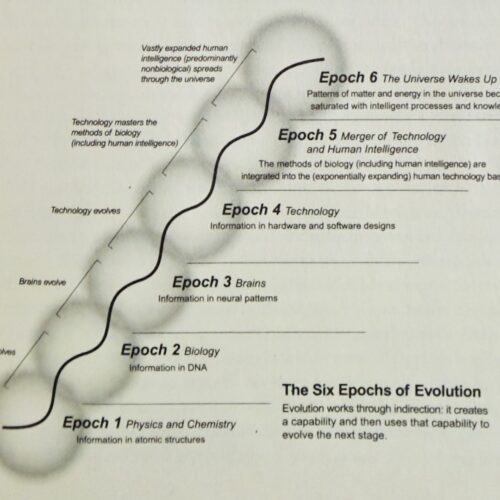
Thus we may indeed end up having smart dust in a universe that “wakes up” as a smart, giant Computronium…
The only thing that worries me a bit is what happens with our human, oh so human species in the age of smart?
What happens to us when my toothbrush gets smarter than the whole of humanity?
I don’t know… But, I guess, that really depends on how smart we are right now…
So, how do we work in a smart way to build a smart future where there is still a smart place for our smart, but really not that smart, formerly smartest species?
Don’t know. But this is what Singularity WEBLOG and Singularity Symposium are all about.
So how smart are you?
Join our conversation about the impact of technology, exponential growth and artificial intelligence and tell us:
Will technology replace biology?
Why or why not?
Related articles by Zemanta
- Singularity Goes Mainstream: NY Times Says Humans Are “So Yesterday” (singularityblog.singularitysymposium.com)
- Will Technology Replace Biology? (singularityblog.singularitysymposium.com)
- Intelligent Textiles Of The Future (singularityblog.singularitysymposium.com)