When Vernor Vinge Coined the Technological Singularity
 When Vernor Vinge coined the term technological singularity few foresaw it becoming the conceptual watershed that it is now.
Today, regardless of whether you are writing about sci fi, futurism, artificial intelligence, technology or the future of humanity, the moment you embrace the longer-term big picture framework of reference is the moment you are writing about the singularity. And if that is not the case, then, you must justify why not. So, in a way, you are still writing about the singularity.
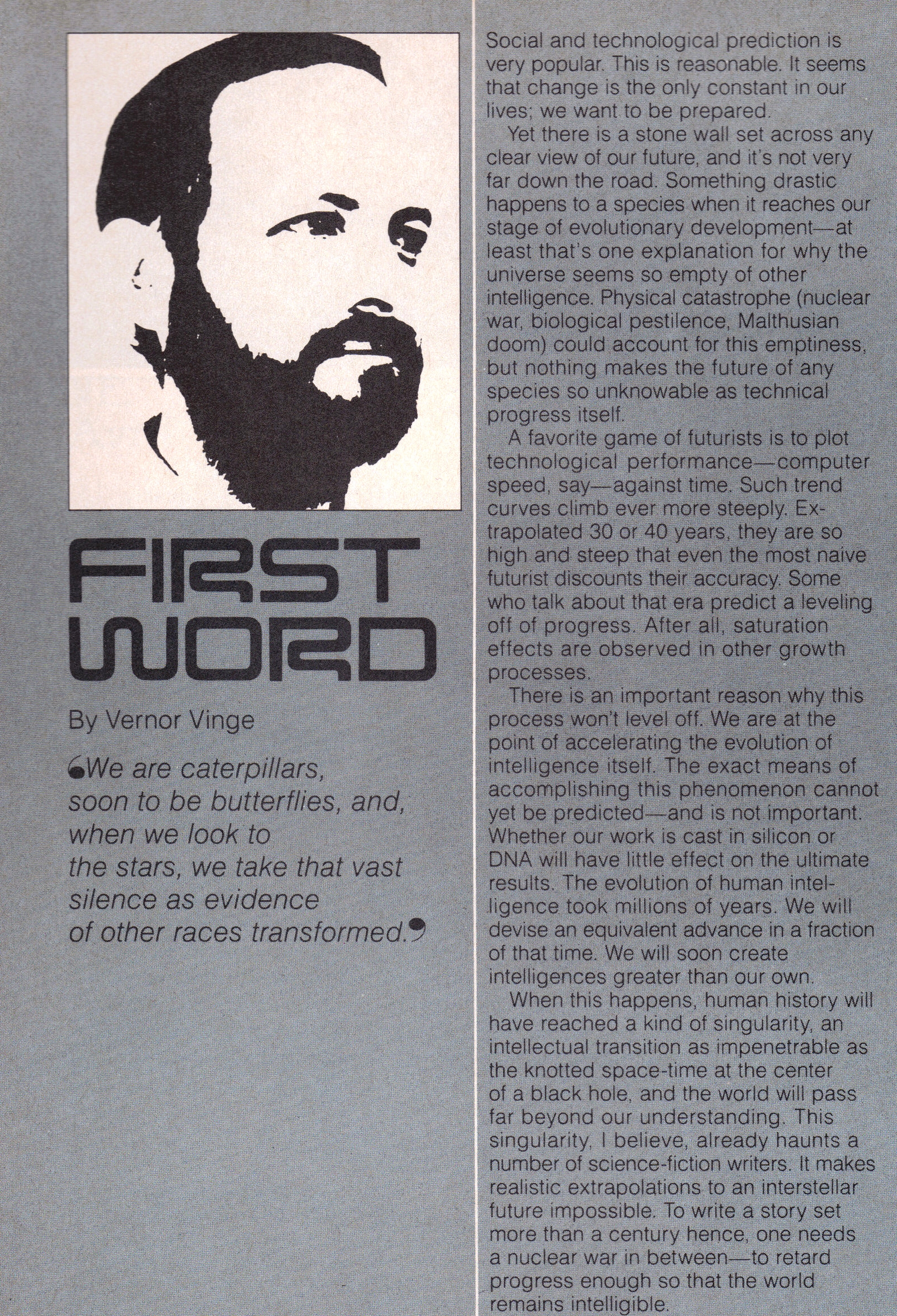
Thanks to Josh Calder, who made the effort to dig out and scan the original article, I can now show you a copy of the actual page where the term was used for the very first time in its contemporary technological context: the January 1983 issue of Omni magazine.
Hope you enjoy this little digital piece of history as much as I do!
Video update:
Adam Ford’s H+ interview with Vernor Vinge where they discuss “topics ranging from the Technological Singularity itself, how the concept came to Vernor, the metaphor implied by the Singularity, Evolution, Humans as goal setting creatures, similarities between the rise of artificial intelligence and the rise of humans within the animal kingdom, definitions of the Singularity, biasing the odds of a beneficial Singularity, strategic forecasting, scenario planning, narratives, education, future studies, how possibility shapes the future, utopias and dystopias, what do we want from the future?, missed opportunities to achieve great things in the past and what may we be missing out on if we don’t make the right choices today.”