X-Men First Class: Transhumanism for the Masses or Aren’t We All Mutants?
 Have you ever felt lonely, struggled to fit in and be normal or been rejected just because you’re different?
Have you ever sought to find out who you really are?
Have you ever wondered if there are others who feel like you?
If you have, then, you will probably like the new X-Men: First Class.
The fifth and, in my opinion, best installment of the series, is not a movie about being a comic superhero endowed with amazing powers. It is a movie about being human and facing all the accompanying eternal questions of the human condition. A movie about feeling different and trying to find your place. About striving to fit in, be accepted and normal. (Whatever that may mean?!) About finding out who you really are and embracing it all – the amazing as well as the imperfect parts of us.
We relate to the characters not because they have superhuman powers but because they have very human problems.
Transhuman is human. Just a more gifted one. But talent often undermines character and the same age old questions are not only still relevant but even more acute than ever. Thus the film depicts the X-Men as a mirror image of our imperfect humanity, with all of its faults and failures.
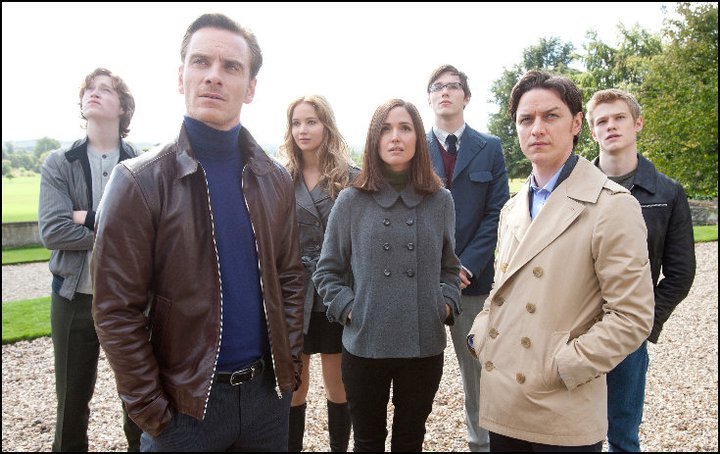
In addition, X-Men: First Class weaves in and touches on a variety of other important topics such as: war and peace, genocide, transhumanism and bio-hacking, evolution and the birth of a new species, beauty, fear of what’s different and unknown, hatred.
The mutants have little in common with each other, other than the fact that they are all different. Yet, ironically, what connects them all (and us) is our humanity — that which is retained even after getting all the super-powers we can ever think of.
We are the human race and we can be or become as any one of these superheroes or supervillains. We get lonely, we struggle to fit in and find our place; we ask the same age-old questions. We are Dr. Jekyll and Mr. Hyde, Professor X, Magneto and Sebastian Shaw. We are black, white, brown, yellow, red and blue (and all the other colors too).
We are Good and Evil.
We are all different and unique, yet human.
So, aren’t we all mutants?
***
Socrates’ verdict: 10 out of 10 (must watch)
Related articles
- Transhumanism and the Technological Singularity
- A Transhumanist Manifesto
- Who are the Heroes of Transhumanism?
- Transhumanism for Children
- Enough Is Not Enough: The Integration of Transhumanism into Pop Culture
- The Charlie Sheen Guide to Predicting Our Transhuman Future