Cryonics: A Glass-state Time Travel
 What if we gave people a way to escape absolute death at the end of their biologically-allotted lifespans? Wouldn’t many of them jump at it? Of course, and they do, and have been for some time now. Religionists believe that the metaverse (or whatever they wish to call the whole macro-everything, including all the ‘spiritual’ bits) is neatly ordered to deliver them into immortality, just in time. There’s no mechanism for this. It just happens.
That’s an amazing technology – no mechanism, no physical processes, no messy cause and effect to worry about. Religionists, however, don’t consider this a technology. It’s beyond technology and little human tinkerings like that. Something else does the miraculous transmutation from decay-prone physical stuff to eternal ethereal stuff – something evidently a lot smarter than we are.
The religionist route is an unfounded one, to say the very least.
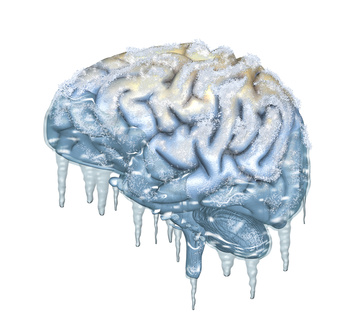
So, what might work if you want to avoid absolute death? First, you need to accept your existence as a host of atoms in particular configurations. Second, you need to think about ways to arrest biological decay, which is just the chemical reactions that happen when the specific set of constraints we call life no longer apply. As Brian Wowk discusses in his essay Medical Time Travel, the Arrhenius equation shows us that chemical reactions stop when temperature drops low enough (-196 °C, just below the boiling point of nitrogen, will suffice for our purposes). Done correctly, with the right concentration of antifreeze-type cryoprotectants, your ‘dead’ brain and its surrounding tissues will undergo ‘glass-state’ vitrification after suspension in liquid nitrogen. Third, armed with this information, you need to act. It’s unlikely that anybody else is going to set up the circumstances for your eventual glass-state transition, so it’s down to you.
 In information-theoretic terms, immortality is already possible. It just isn’t much fun, because you can’t be conscious of anything. Bad and extant, good and gone, you hang on the precipice tip of an unclosed infinity symbol. With your molecular interactions halted, nothing happens. Time yawns, and down its craw you silently fall. Nobody knows how to resurrect a person from this immortal abeyance. Some have theories, some even incipient skills and tools, but no one yet knows how to trigger the temporal gag reflex that will cough you out and close the sigil.
But think on it. Think on the potential. The glass-state time-traveler is indeterminate, undissipated, untruncated. Her death was not information-theoretic death. She is orders of magnitude less dead than the conventionally-erased many.
Skepticism about her possible revival amounts to this: because we cannot imagine how she might be revived, we cannot imagine how she might be revived. Might it take nanobots, substrate-independence tech, scanning neuromorphic arrays, advanced connectomic inference, molecular assemblers? Who knows? Perhaps all of these, perhaps none. No matter. She has the luxury of time. Only if abandoned and allowed to decay (or if our race extinguishes itself before the necessary technology arises) will her problem become terminally insurmountable.
This potential solution to the problem of absolute death defies established human conventions of death and corpse-disposal. It triggers ‘cognitive dissonance’ and repugnance reactions. Scientist Leon Kass finds ‘wisdom’ in the human repugnance response. On cryonics, I neither feel it nor find it wise. Post-mortem cryoprotective abeyance is a logical choice. Nevertheless, the heavy blinders of repugnance and convention still screen this from most. And we ‘cryonicists’ do it to ourselves; we are far from immune to the emotional and existential (for a few, even ‘spiritual’) turmoil our mortal decision may cause.
‘Cryonauts’ are simply mute, liminal dwellers on an unknown threshold. Not living, not dead; not formerly crazy – nor necessarily selfish, altruistic, or pioneering. Just – for the love of hope and reason – not irretrievably lost.
About the Author:
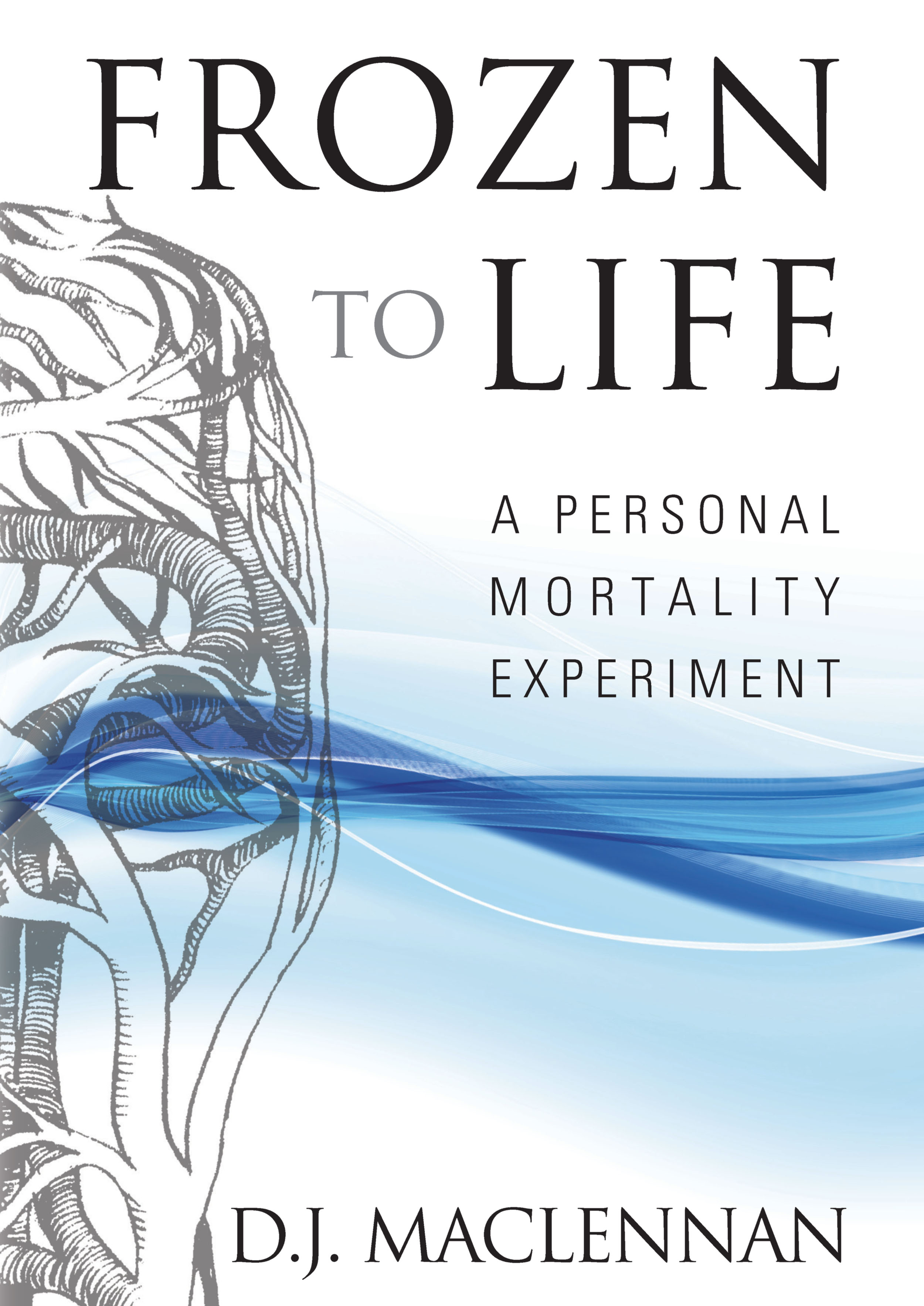
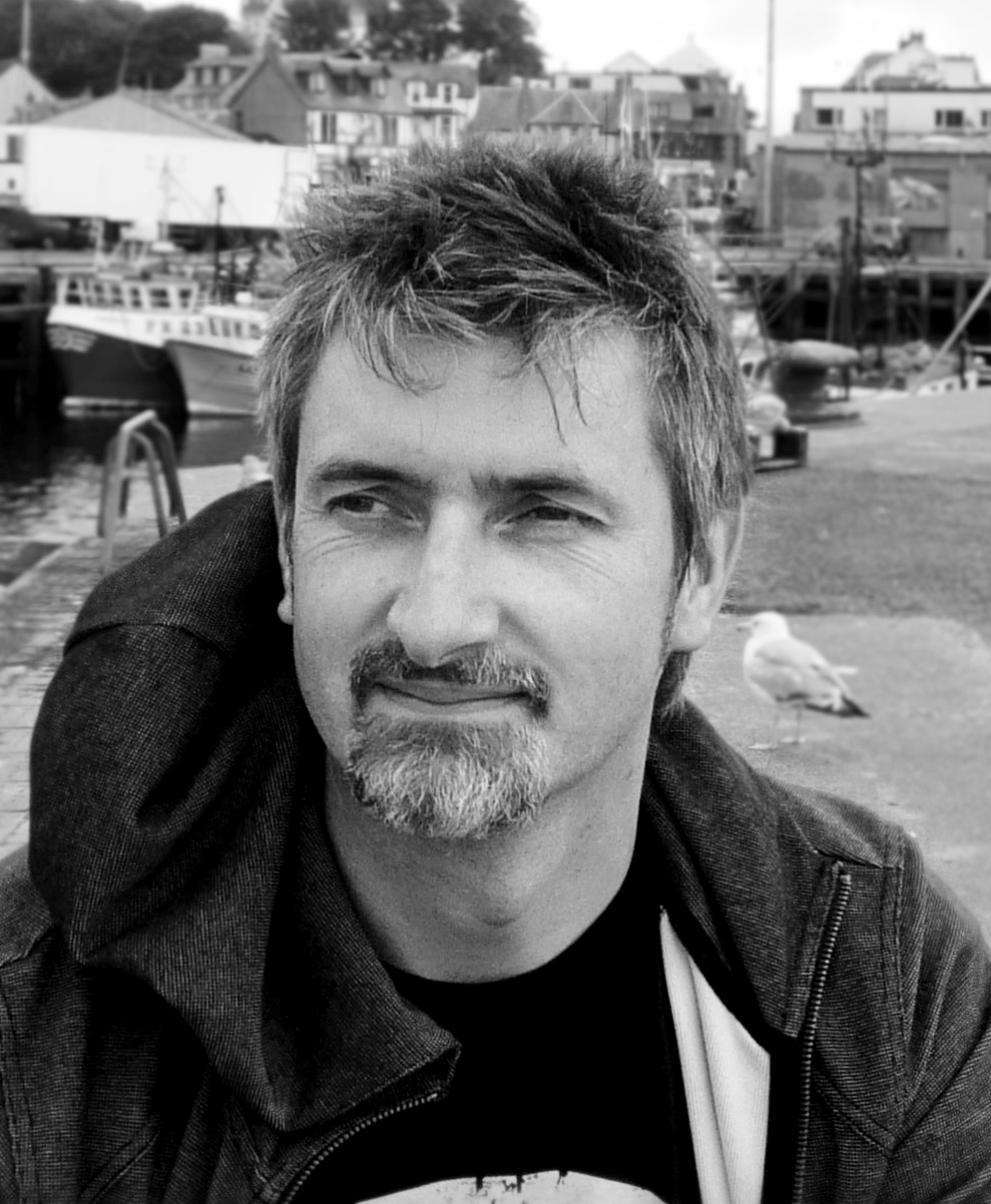 D.J. MacLennan is a futurist author who lives on the Isle of Skye, Scotland. He wrote two chapters of the recently-published cryonics anthology The Prospect of Immortality – Fifty Years Later. His new book Frozen to Life: A Personal Mortality Experiment is due for release at the end of August 2015.
Related articles
- My Video Tour of Alcor and Interview with CEO Max More
- We Will Live Again [Documentary About the Cryonics Institute]
- David Ettinger on Singularity 1 on 1: Take Steps and Be Prepared!
- Andy Zawacki Gives Us A Tour of the Cryonics Institute
- Dr. Ken Hayworth: Will You Preserve Your Brain?
- Ken Hayworth on Singularity 1 on 1: Brain Preservation is the Logical Lifeboat
- Question Everything: Max More on Singularity 1 on 1